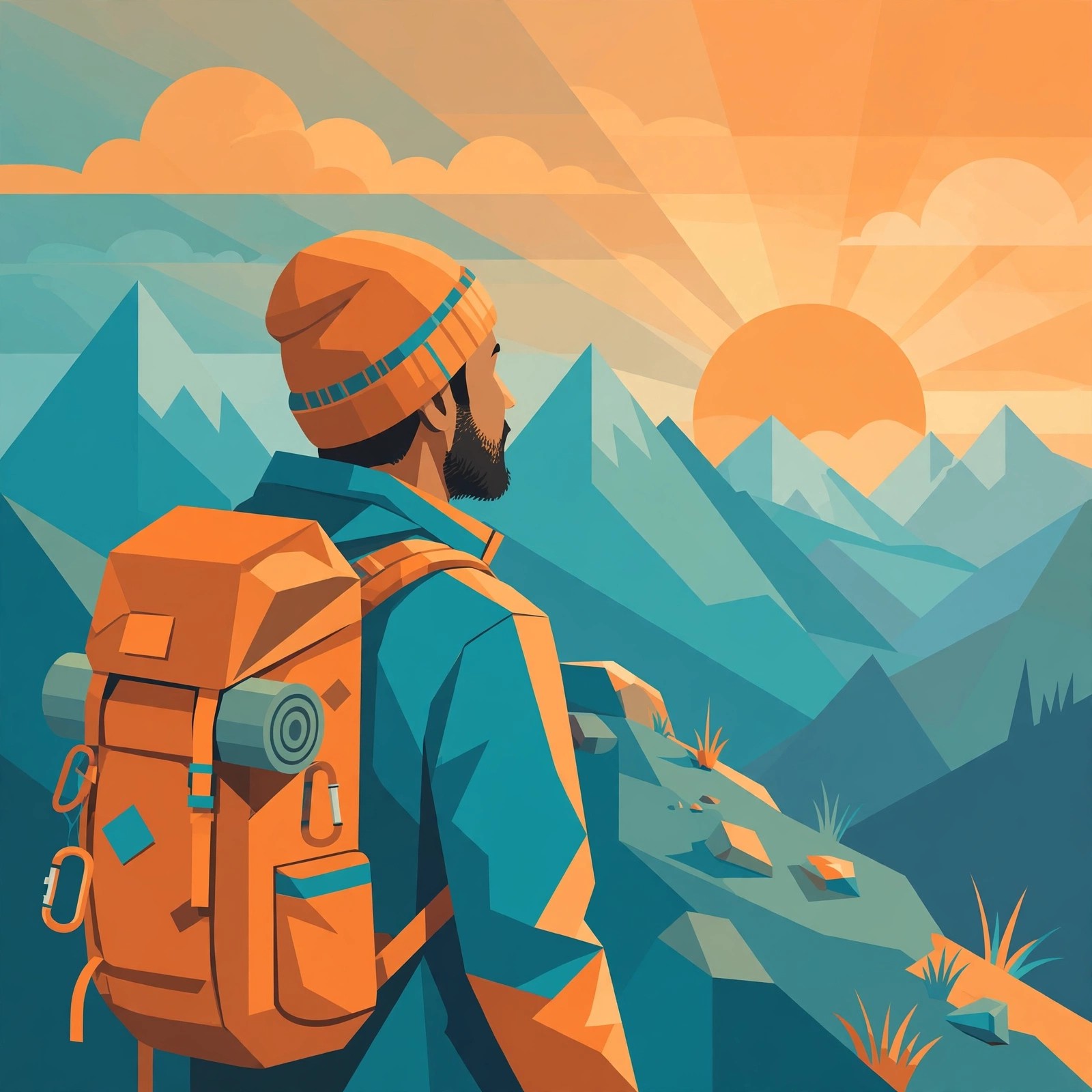
Your backpack is the interface between you and everything you carry for a week or more in the mountains. Get it wrong and every day is a negotiation with shoulder pain and a swinging load; get it right and you barely think about it. Choosing one is less about brands and more about three things: the right capacity for your style of trekking, a fit matched to your body, and honest features. Here is how to work through all three.
Capacity: match the bag to the trip
As a rough guide, day hikes want 20 to 40 litres; multi-day treks where you carry your own tent, food and kit typically need 50 to 60 litres; extended or winter trips push past 60. But the numbers only make sense against your packing style. An ultralight trekker can do a week from a 40-litre pack; a comfort-oriented walker needs more. The real rule is subtler: buy the smallest pack you can honestly pack for your longest trip, because a half-empty 70-litre bag invites you to fill it with things you will regret on day three.
Do a trial pack before buying – take your actual sleeping bag, tent, stove and clothing to the shop, or at least lay them out at home. A bag that swallows your kit with no compression left is too big; one that needs everything lashed to the outside is too small.
Fit: torso length, not height
The single most important measurement is your torso length – not your height or weight. Find the C7 vertebra, the bony bump at the base of your neck when you bend your head forward, and the iliac crest, the top of your hip bones at your sides. The distance between them is your torso size, and the pack’s suspension should match it. A tall person can have a short torso and vice versa, so ignore the S/M/L label until you have measured.
In the shop, load the pack with 10 to 15 kilograms before judging anything – an empty pack fits everyone. Then fit in this order: hip belt first, cinched so it sits on the iliac crest and fully covers the hip bones, with the buckle ends a few inches apart; then shoulder straps, snug but not lifting the belt; then the load-lifter straps angled at about 45 degrees to pull the pack’s weight forward; then the sternum strap about two inches below the collarbone to stop the shoulder straps splaying; then the lower stabilisers. A correctly fitted pack carries most of the weight – up to around 80 percent – on your hips, not your shoulders. Walk around, jump, twist: the pack should move with you as one unit. Narrow-waisted hikers sometimes find standard hip belts won’t cinch tight enough; look for models with interchangeable belts rather than tolerating a slipping fit.
Frame and features
Internal-frame packs are the standard for most trekkers: a shaped frame sheet and stays give the structure that transfers load to the hips without the bulk of old external frames. Frameless ultralight packs are superb for experienced light packers and miserable with heavy loads – match the frame to the weight you will actually carry.
Feature checklist: a padded, adjustable hip belt and adjustable back system (essential); a sternum strap and side compression straps; a top lid pocket for trail essentials; ice-axe and trekking-pole loops; a rain cover – or at least a pack liner, since covers leak at seams and zippers in real downpours; a hydration-bladder sleeve and tube port; and on larger packs, a separate sleeping-bag compartment with its own access. Gender-specific models adjust strap shape and hip-belt angle for different anatomy; they suit many people, but plenty of walkers are perfectly comfortable in unisex packs – fit is individual, labels are general.
Packing it well
A good pack packed badly still carries badly. Heavy items – food, water, stove – go in the centre of the pack, close to your back and between shoulder and hip height. Light, bulky camp kit – the sleeping bag – goes at the bottom. Trail essentials you need without stopping – snacks, first aid, headlamp, water filter, rain shell – live in the top lid and outside pockets. Keep the load balanced left to right, cinch the compression straps so nothing shifts, and you have the full system: the right bag, fitted to your body, loaded so the weight sits where your skeleton, not your shoulders, carries it.
Arjun Mehta is the pen name behind Mountains Bliss — practical mountain-travel guides with routes, costs, seasons and safety notes, researched from real trekker discussions and cross-checked before publishing. No sponsored posts, ever.
More about Mountains Bliss →