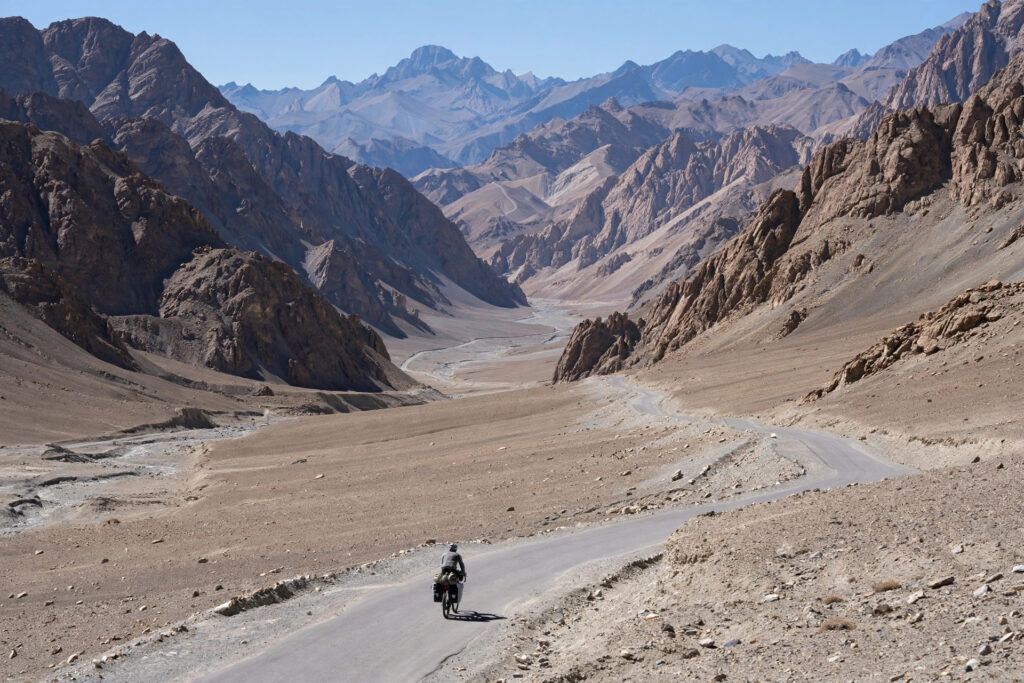
There is slow travel, and then there is Ladakh by bicycle — the slowest, hardest, most immersive way to cross a high-altitude desert. One cyclist’s summer tour through Ladakh’s stark mountain desert is a reminder that the region rewards those who meet it at its own pace, and punishes those who underestimate it.
Why a bicycle changes everything
On a bike, altitude is not scenery — it is resistance. Every climb is earned, every descent is a gift, and the thin air taxes you in ways no training ride at home can fully simulate. Distances that look trivial on a map become full-day commitments. Water, food, and shelter stop being conveniences and become logistics.
The lesson, stated plainly
The implied lesson of this trip report is also its bluntest: extreme-altitude cycling requires serious fitness and serious planning, in equal measure. This is not a ride to attempt on enthusiasm alone. Conditioning, route research, acclimatisation strategy, and contingency planning are the entry ticket — the bicycle is the easy part.
Acclimatisation deserves special emphasis for cyclists, because a bicycle removes every shortcut. In a car you can ascend a pass in an hour; on a bike you earn every metre of it, which means your body gets a longer, slower exposure to altitude — a blessing if you pace it, a hazard if you do not. Conservative daily gains, rest days taken before you feel you need them, and a hard rule about descending when symptoms appear are the non-negotiables of a high-altitude tour.
Who should even consider it
Experienced tourers with high-altitude experience and a conservative streak: this is your kind of challenge. Everyone else should treat this thread as inspiration with a warning label — beautiful, possible, and absolutely not casual. No costs were shared, so any budget planning starts with your own research.
Drawn from a real trip shared on Reddit (r/bicycletouring).
Arjun Mehta is the pen name behind Mountains Bliss — practical mountain-travel guides with routes, costs, seasons and safety notes, researched from real trekker discussions and cross-checked before publishing. No sponsored posts, ever.
More about Mountains Bliss →